PaketLab
Design battery packs in 3D with any cell from 18650 to LiFePO4 prismatic — voltage, cost, BMS wiring and technical drawings, all in real time.
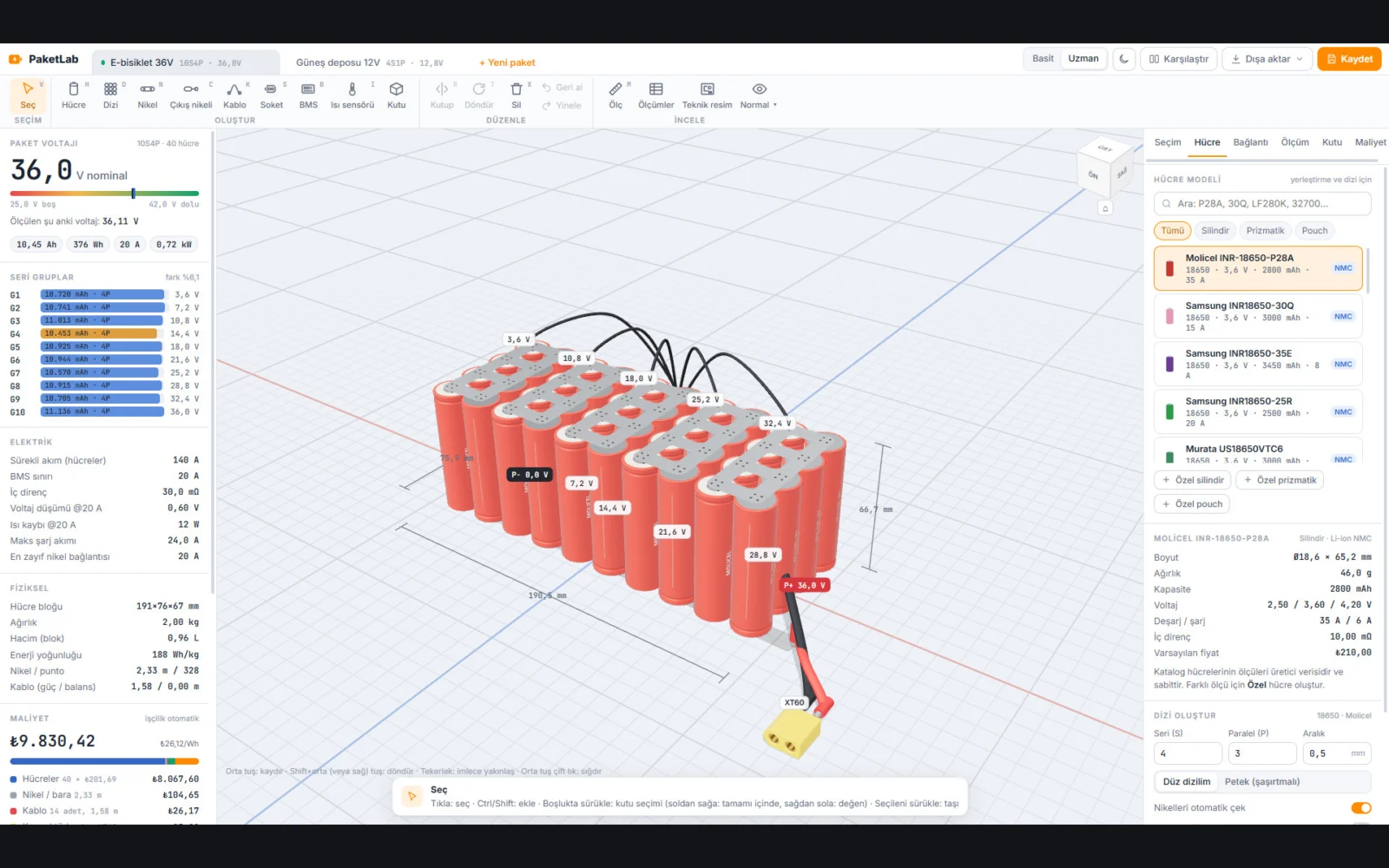
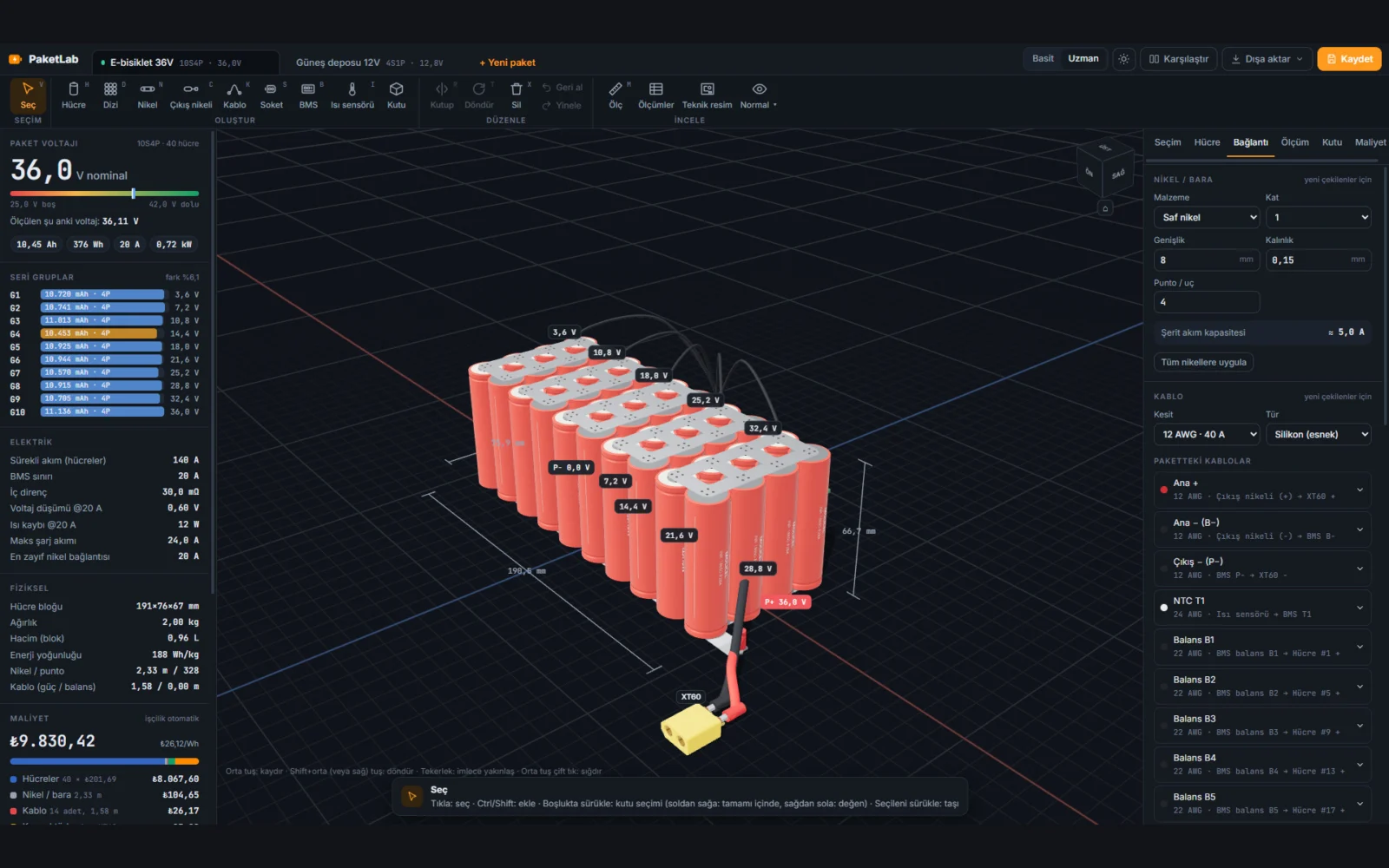
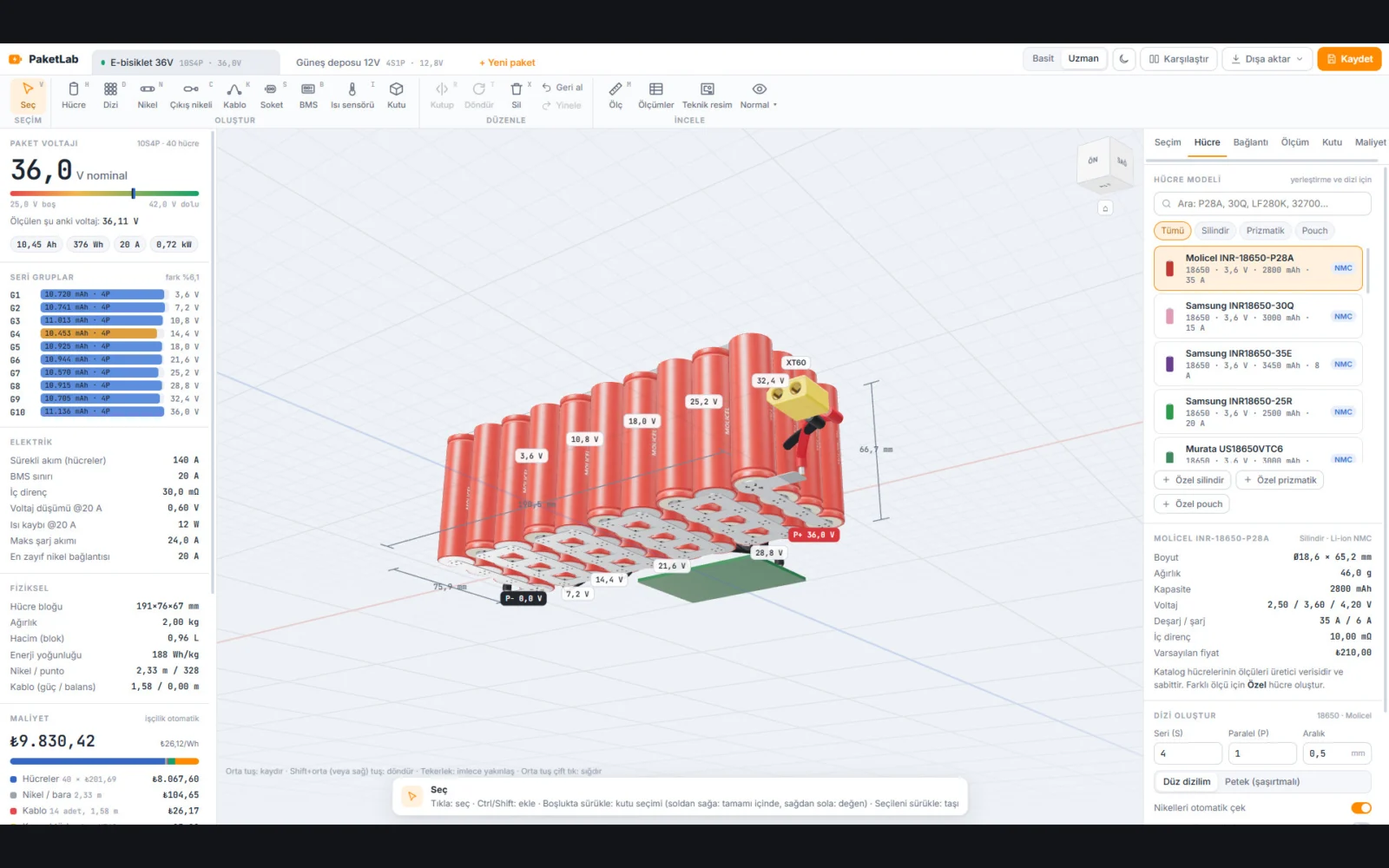
Building a battery pack usually starts with paper, a calculator and trial and error: which cell, how many in series and parallel, will the nickel carry the current, do the BMS balance leads land on the right group, how big should the box be, what will it cost? PaketLab answers all of these on one screen, live and in 3D.
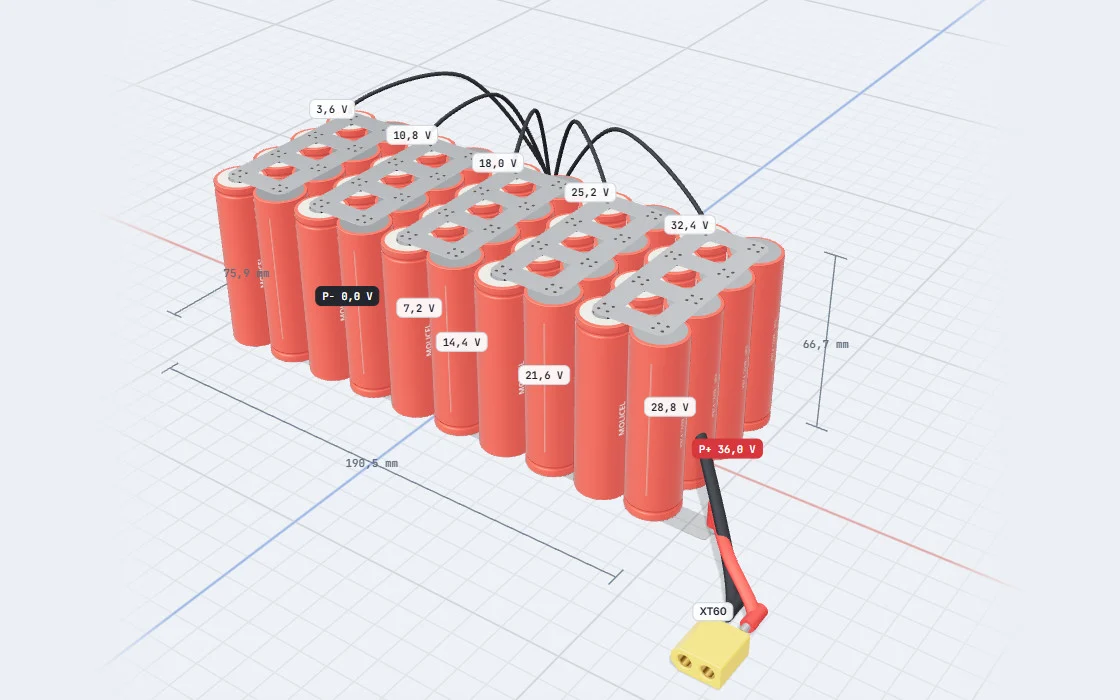
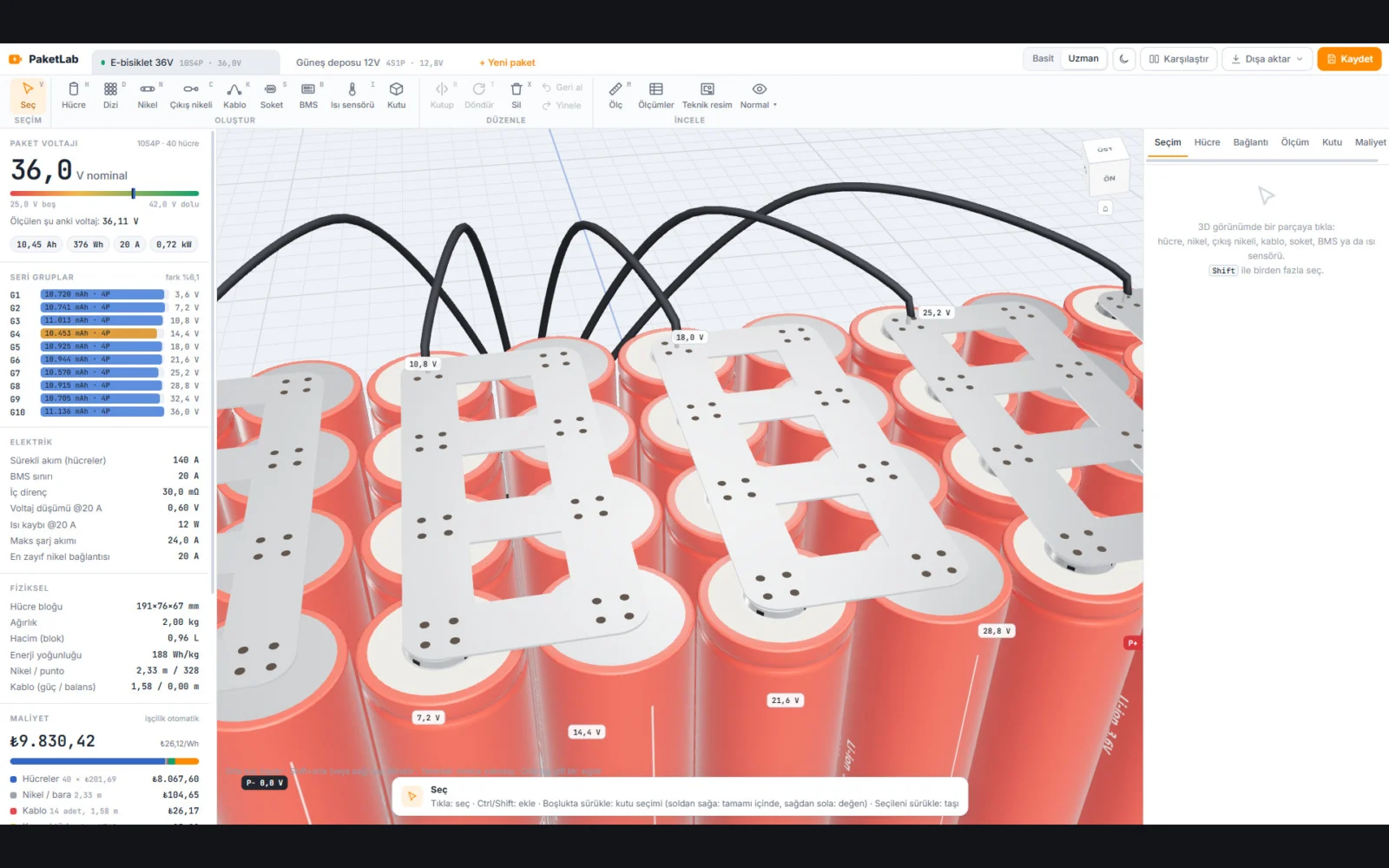
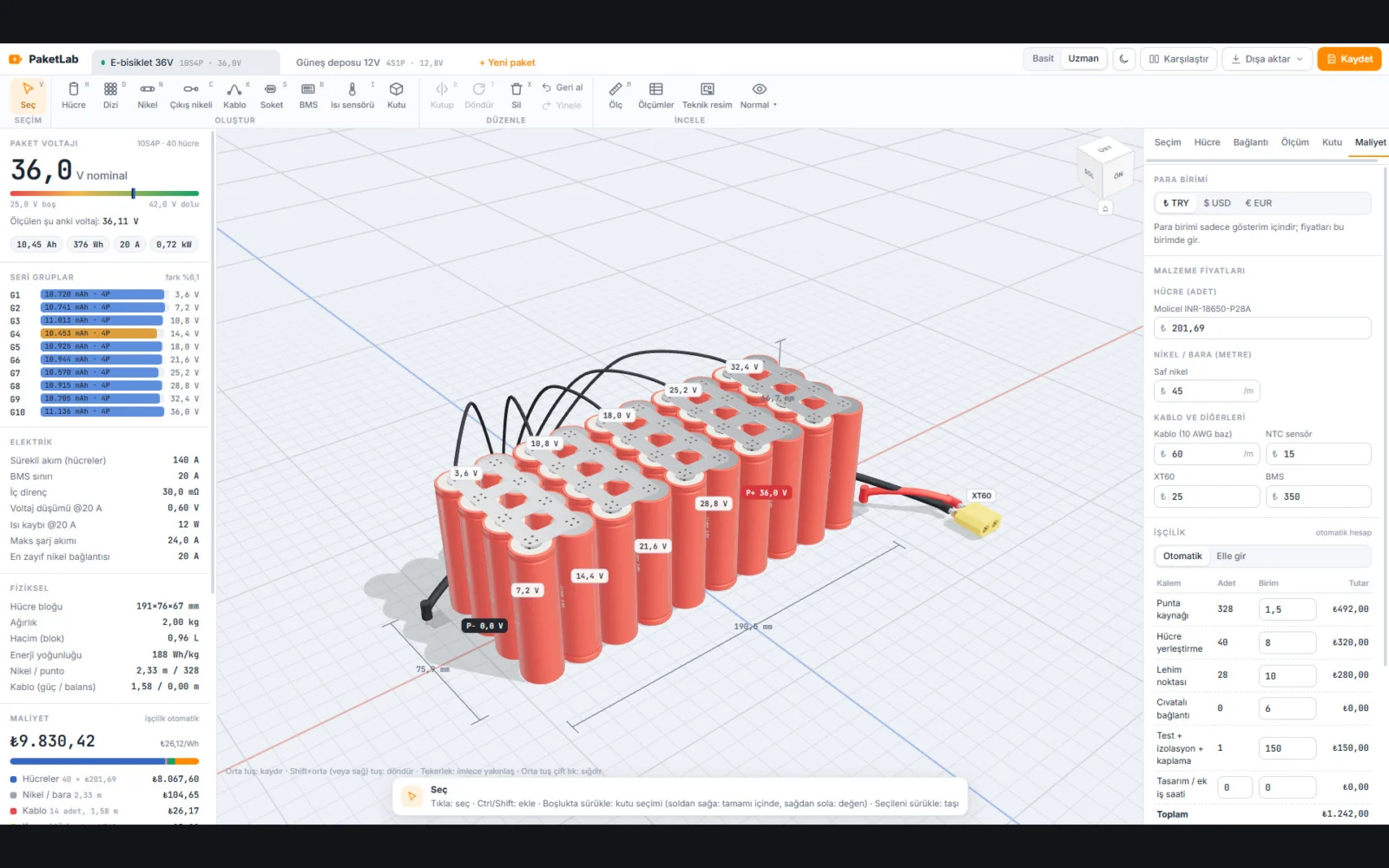
You place cells in a 3D scene, pull nickel strips by hand and route cables wherever you want; PaketLab solves the pack’s circuit in the background and writes the voltage of every node right on the nickel. The moment a strip is added, the series chain, pack voltage, capacity, energy and possible faults update.
Highlights
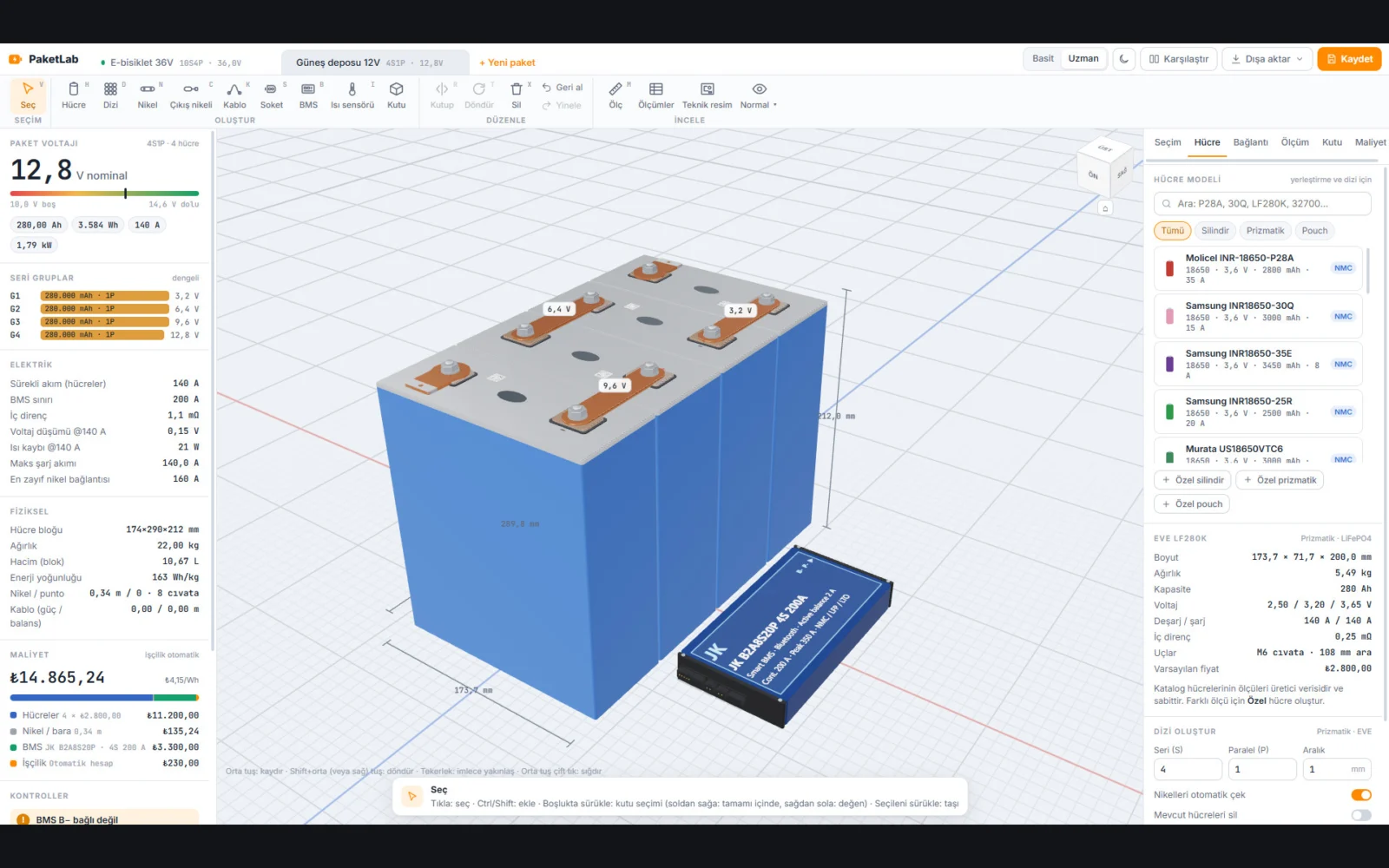
- Real cell catalogue: 20 models including Molicel P28A/P42A, Samsung 30Q/35E/25R/40T/50E, Murata VTC6, LG MJ1/M50LT, A123 26650, LiFePO4 32700/33140, Yinlong LTO and EVE LF105/LF280K/LF304/MB31 prismatics, modelled to datasheet dimensions. Cylindrical, prismatic and pouch formats, plus custom cells with your own dimensions.
- Hand-pulled nickel, live voltage: strips are drawn by clicking cell terminals; the circuit is re-solved on every change and each node shows its voltage. Shorts, reversed cells and loose terminals are flagged instantly.
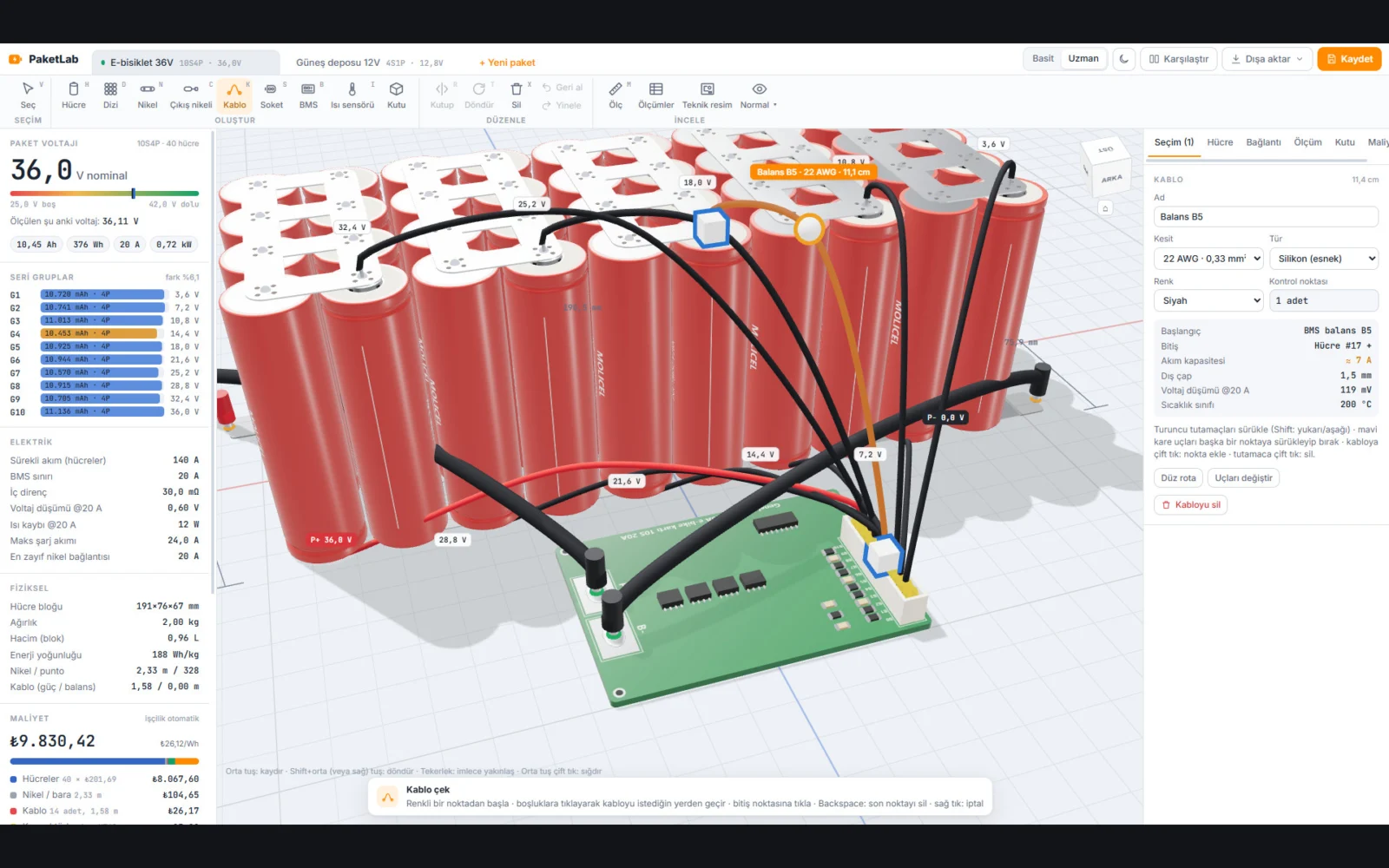
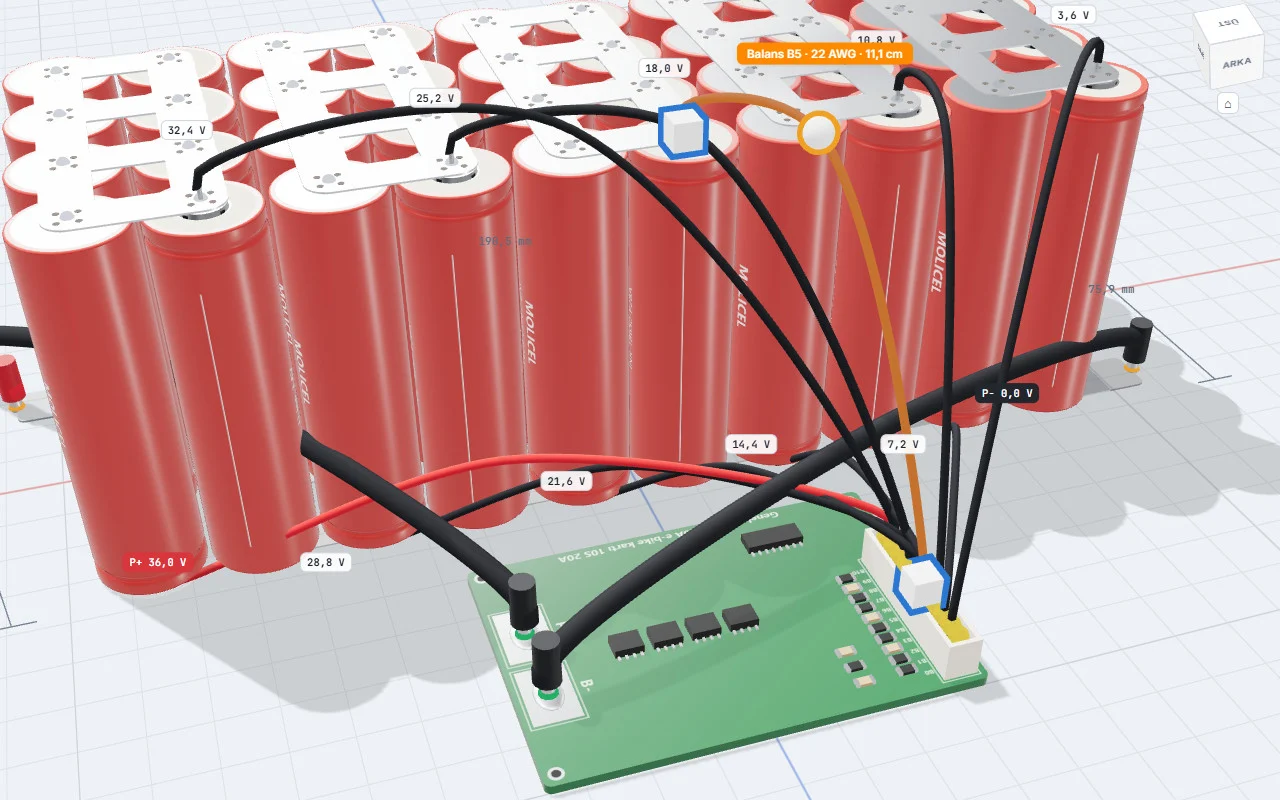
- Real BMS units with real pinouts: 14 market models (JK, Daly, JBD/Overkill, ANT and bare protection boards). Nothing is wired automatically: you draw the balance leads, PaketLab verifies each lands on the correct series group.
- Free-form wiring: snap points on output tabs, BMS pins, connector pins and terminals; click waypoints to route, reshape with handles. Gauge, insulation type, length, ampacity and voltage drop are calculated.
- Connectors & sensors: XT30/XT60/XT90/XT90-S, AS150, EC5, Anderson SB50 and Powerpole at real size; NTC sensors stick exactly where you click on a cell.
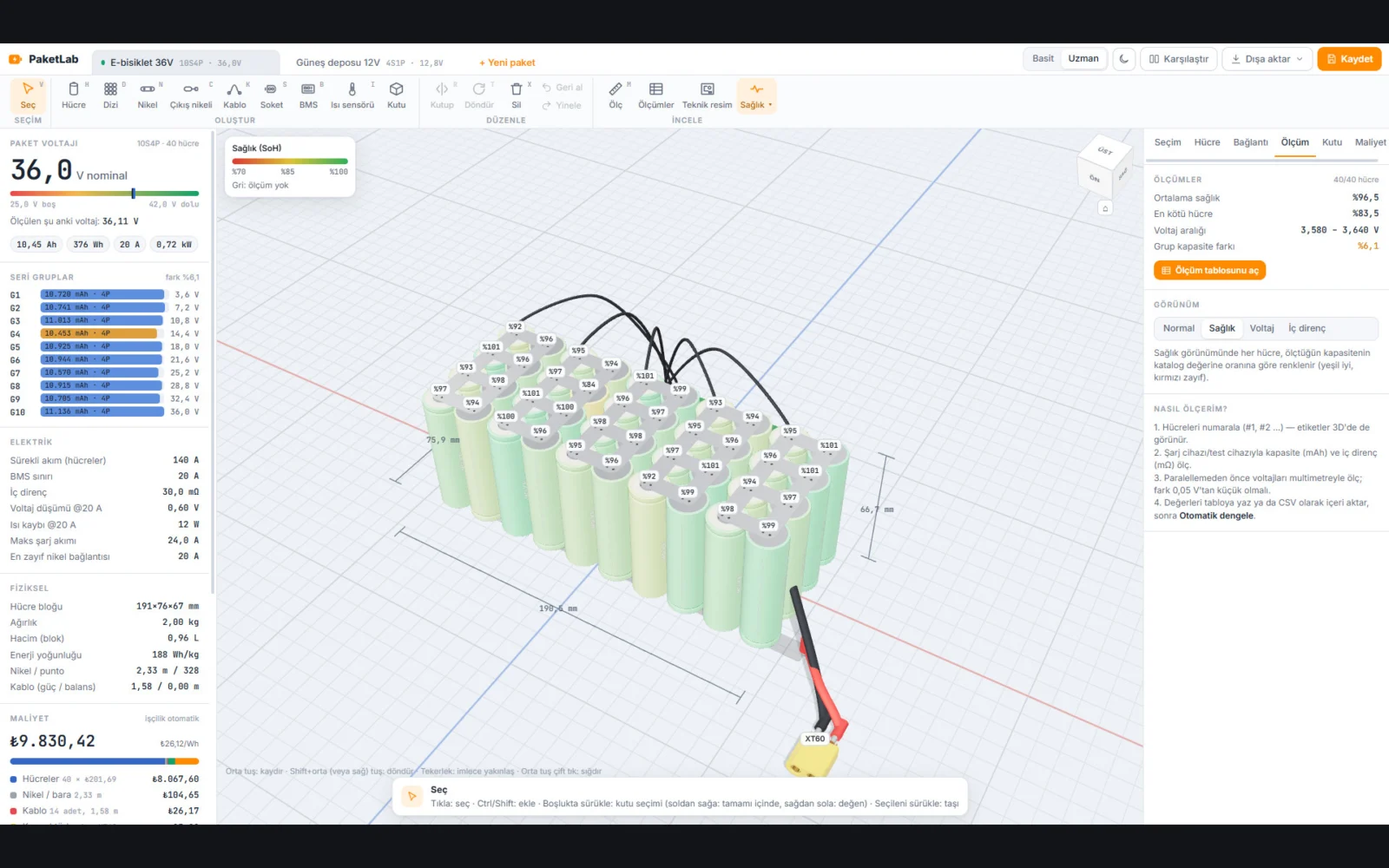
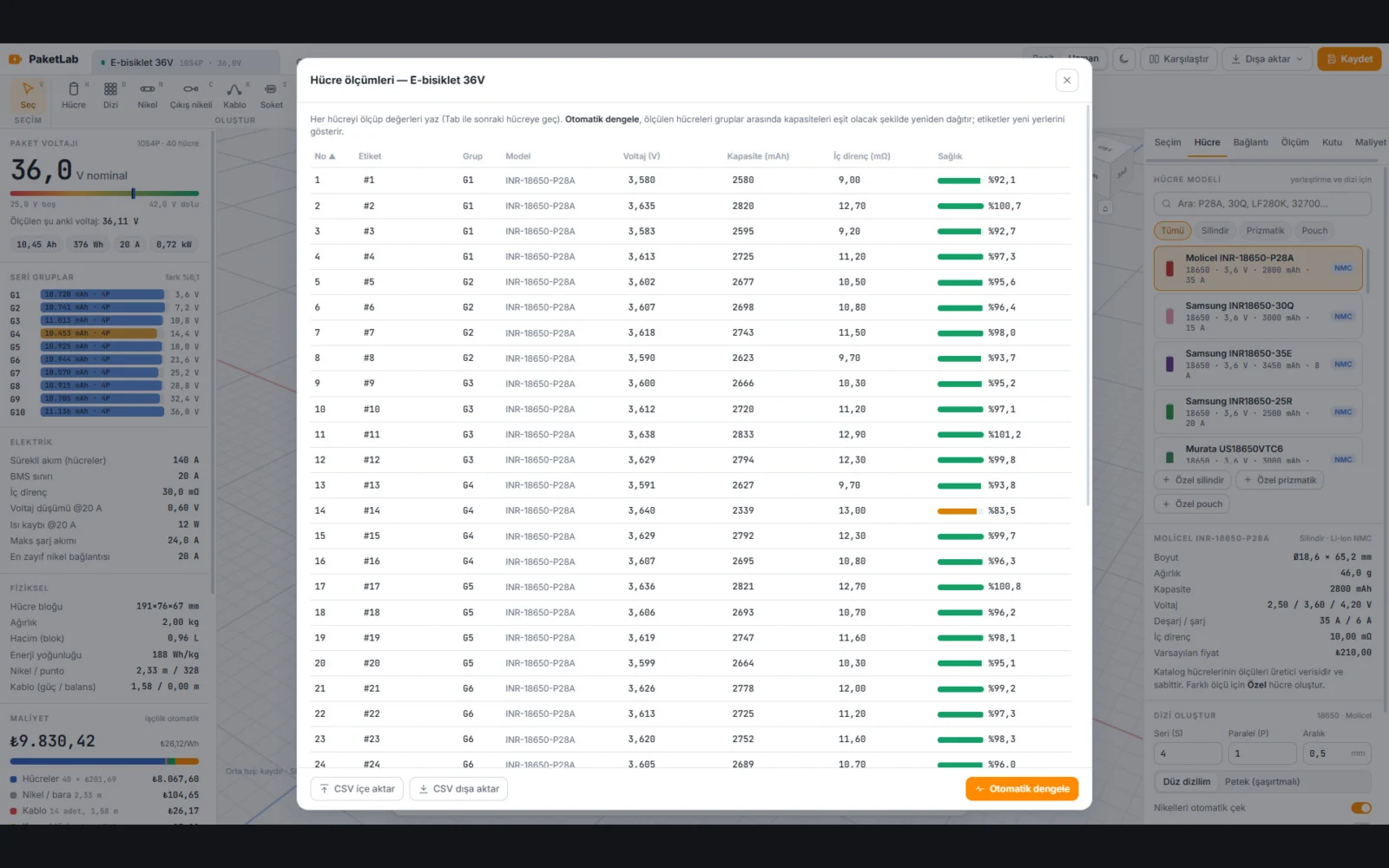
- Cell health heatmap: enter or import measured voltage, capacity and internal resistance; view the pack as a health/voltage/IR heatmap; auto-balance redistributes cells to minimise group capacity spread.
- Cost & automatic labour: materials priced per item; spot welds, assembly, solder joints and bolts are counted from the design to estimate labour; margin, sale price and cost per Wh.
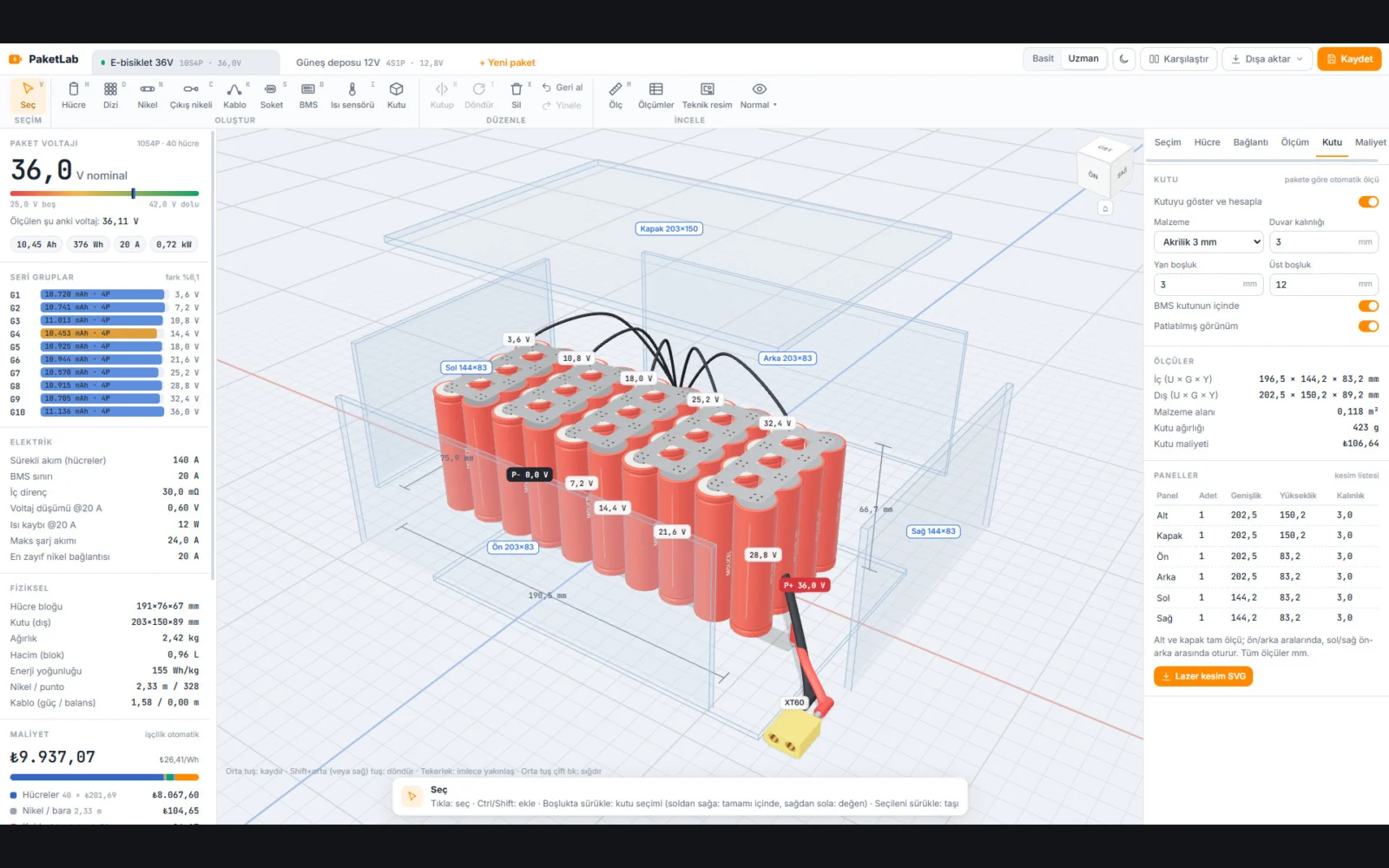
- Enclosure designer: auto-sized box with every panel’s dimensions, area, weight and cost; laser-cut SVG at 1:1.
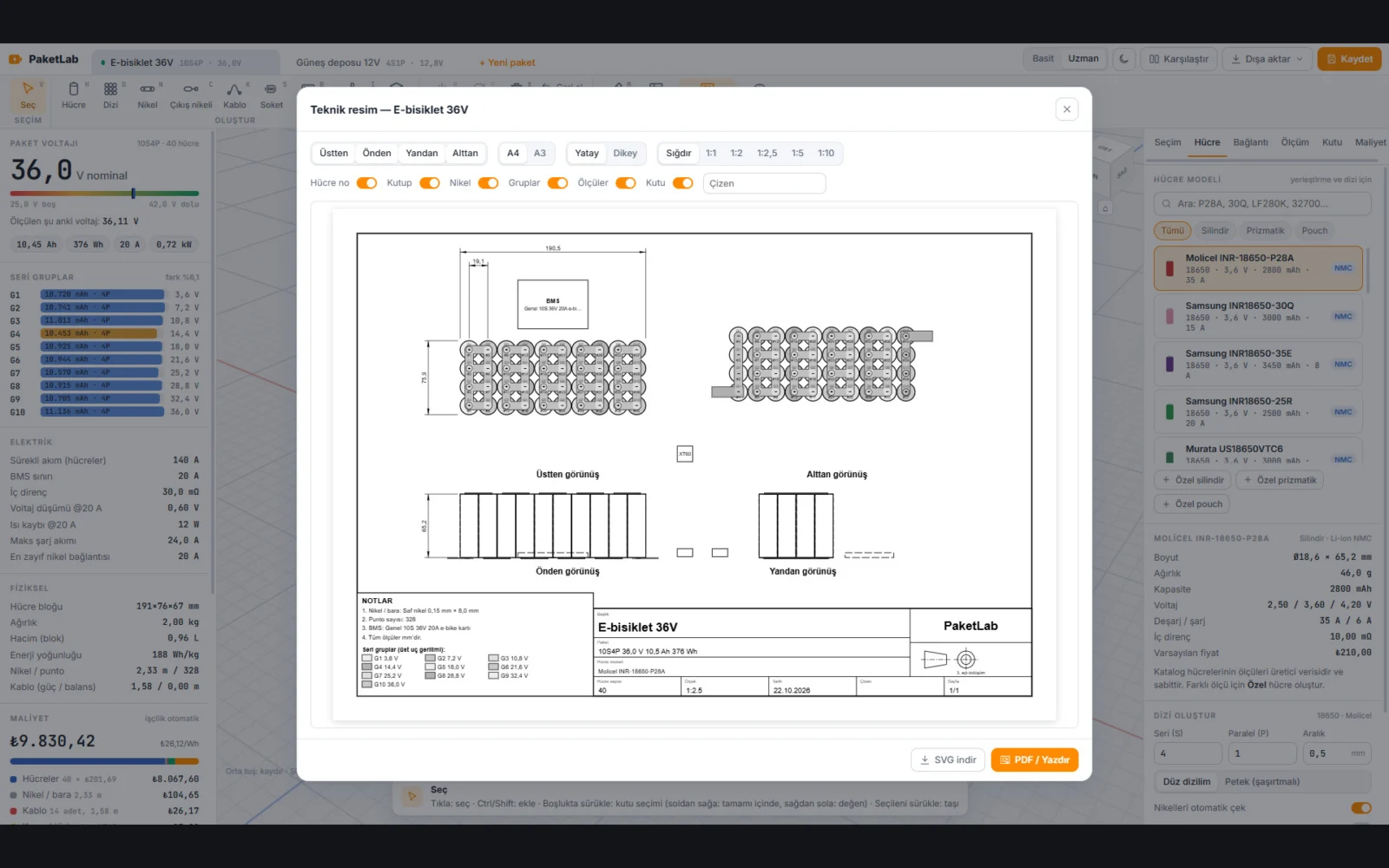
- 2D technical drawing: top, bottom, front and side views with dimensions, cell numbers, polarity, nickel, group voltages and a title block; A4/A3 as PDF or SVG.
- Pro 3D experience: Fusion 360-style navigation, view cube, box selection, undo/redo, light & dark themes, Simple and Expert modes.
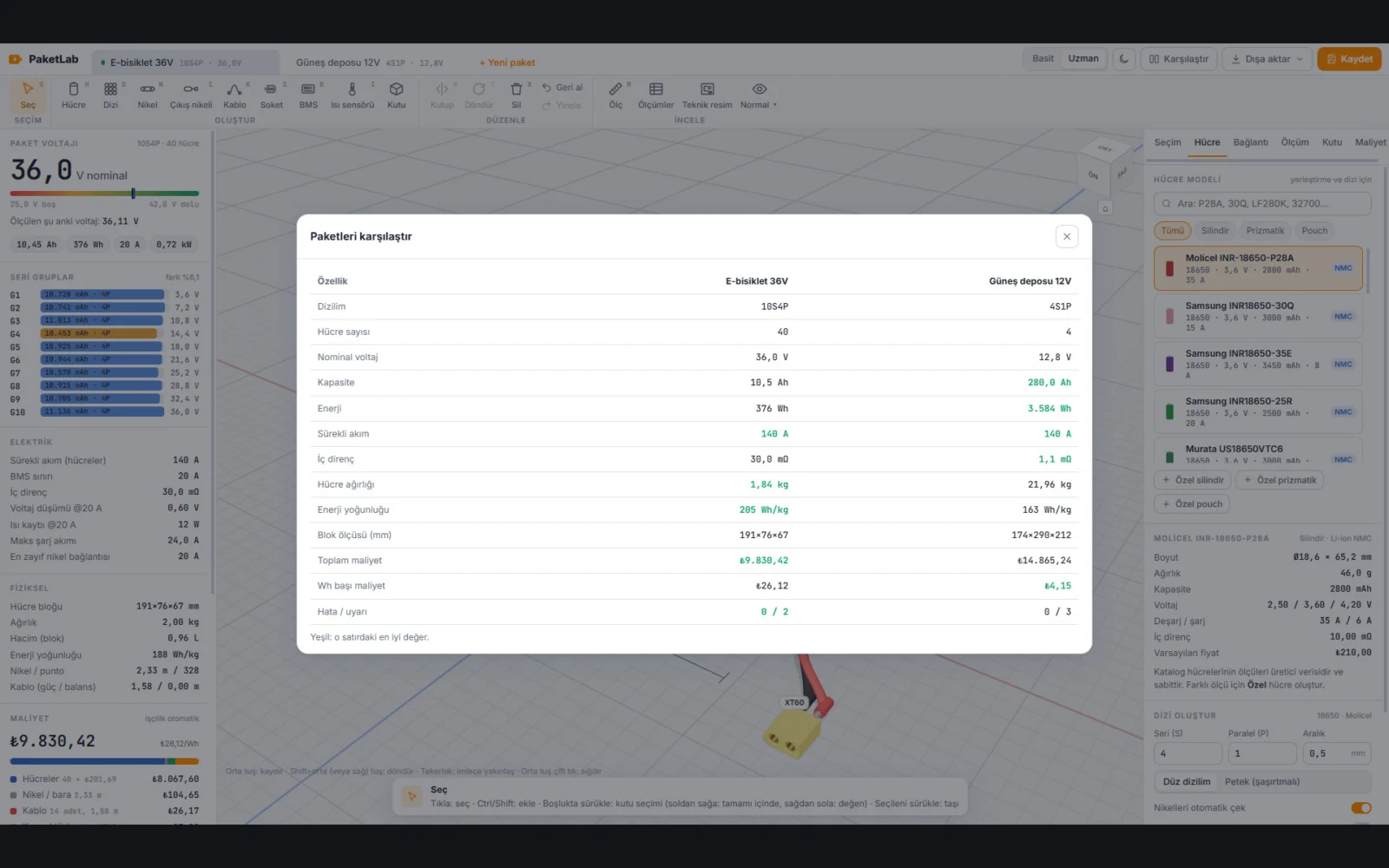
- Multiple packs & comparison: several pack tabs in one project, compared side by side on voltage, capacity, energy density and cost.
- Exports: project file (JSON), bill of materials (CSV), cell measurements (CSV), laser-cut SVG, PNG and a printable report.
By the numbers
- 20 real cell models (cylindrical, prismatic, pouch)
- 14 real BMS models with their pinouts
- 8 connector types, 11 wire gauges, 3 insulation types
- 4 view modes (normal, health, voltage, internal resistance)
- 6 export formats
- A calculation engine verified by automated tests
Tech
- Front end: React 18 + TypeScript, Vite.
- 3D: three.js with fully procedural models (no external model files), an anti-aliased infinite grid shader and a custom Fusion-style camera controller.
- Calculation engine: union-find net solving, series-group potentials, nickel/cable ampacity, Catmull-Rom cable lengths, enclosure and cost; UI-independent and unit-tested (Vitest).
- State: Zustand with unlimited undo/redo and autosave in the browser.
- Platform: web first; desktop (Tauri) and mobile (Capacitor) versions planned from the same codebase.
PaketLab turns pack building from guesswork into a measurable, checkable and shareable design process, from the hobby workshop to small-batch production.