Airsoft Digital Trigger Unit
A Hall-sensor digital trigger unit for airsoft AEGs. It counts every gear cycle via a magnet in the sector gear, drives the motor through a MOSFET and is configured from a phone over BLE.
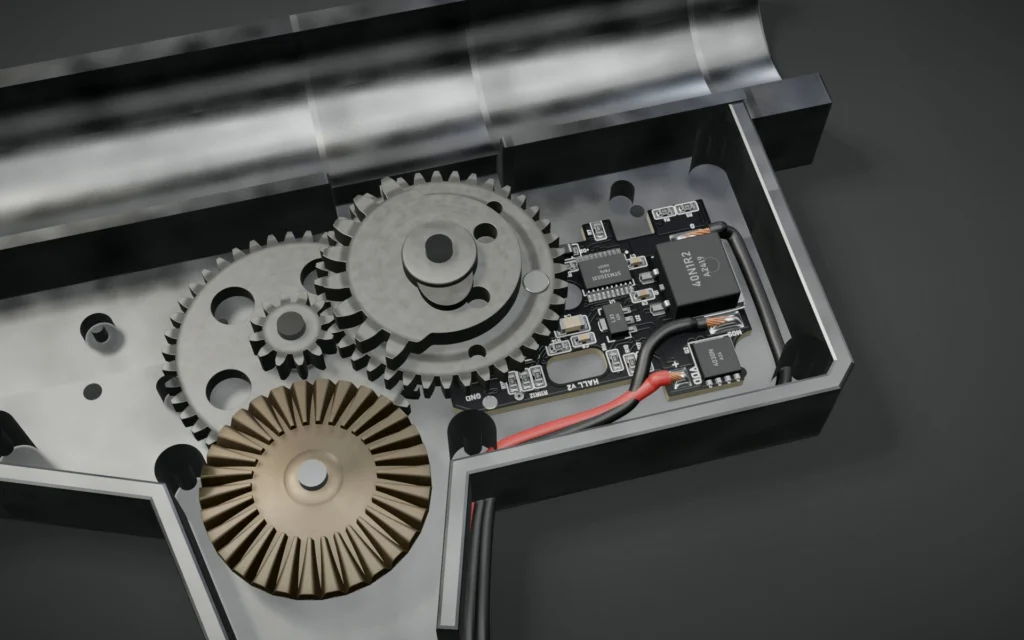
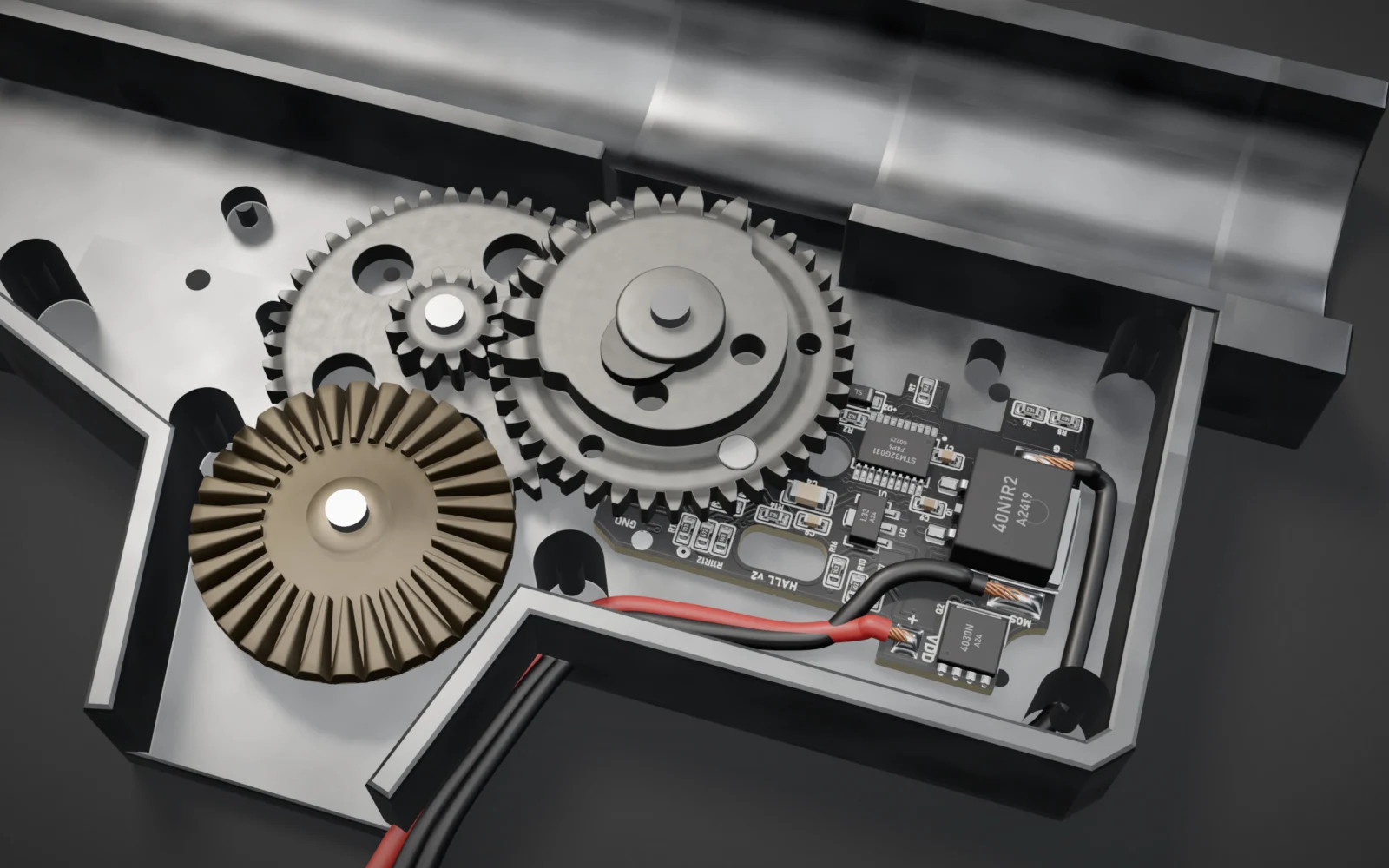
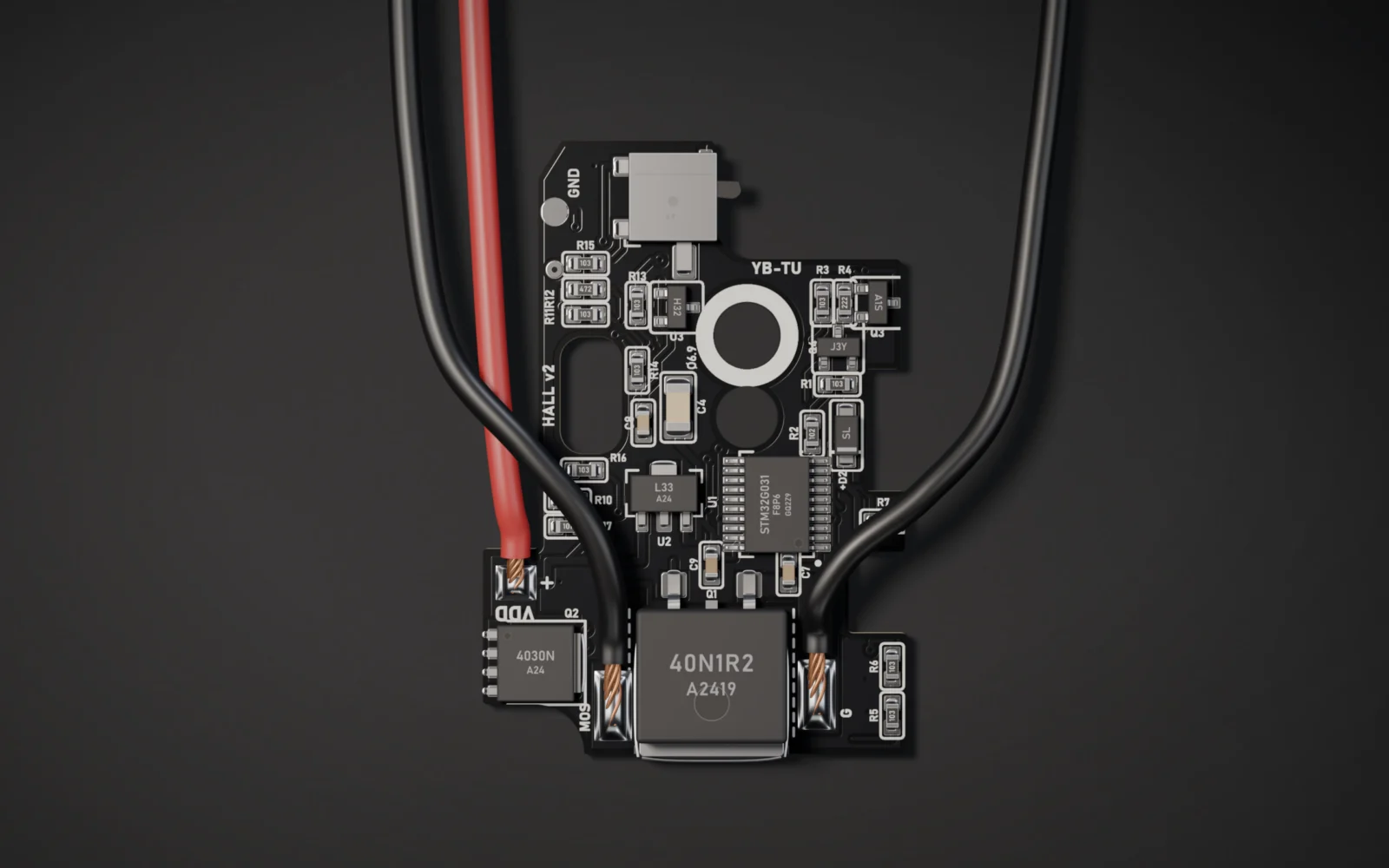
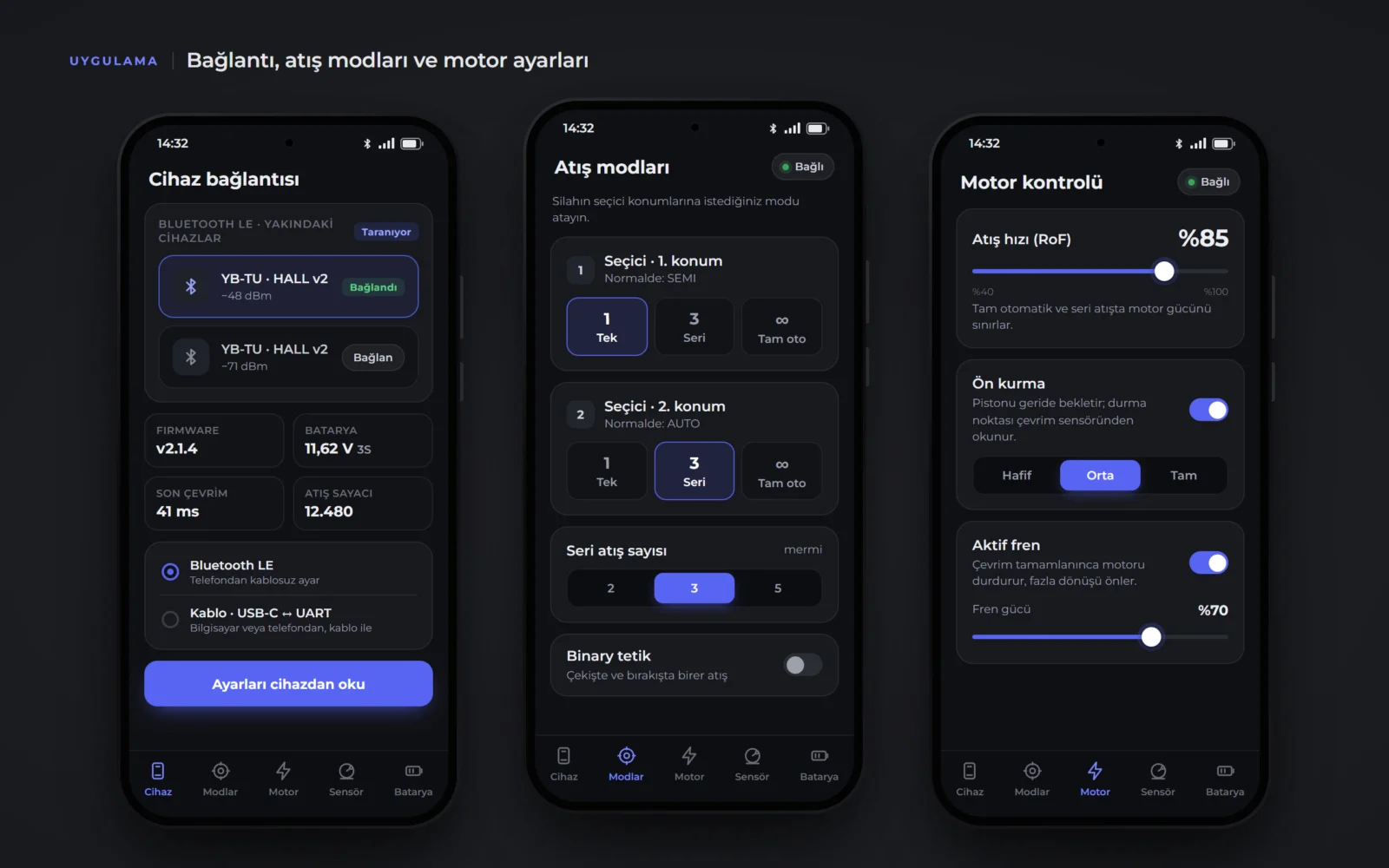
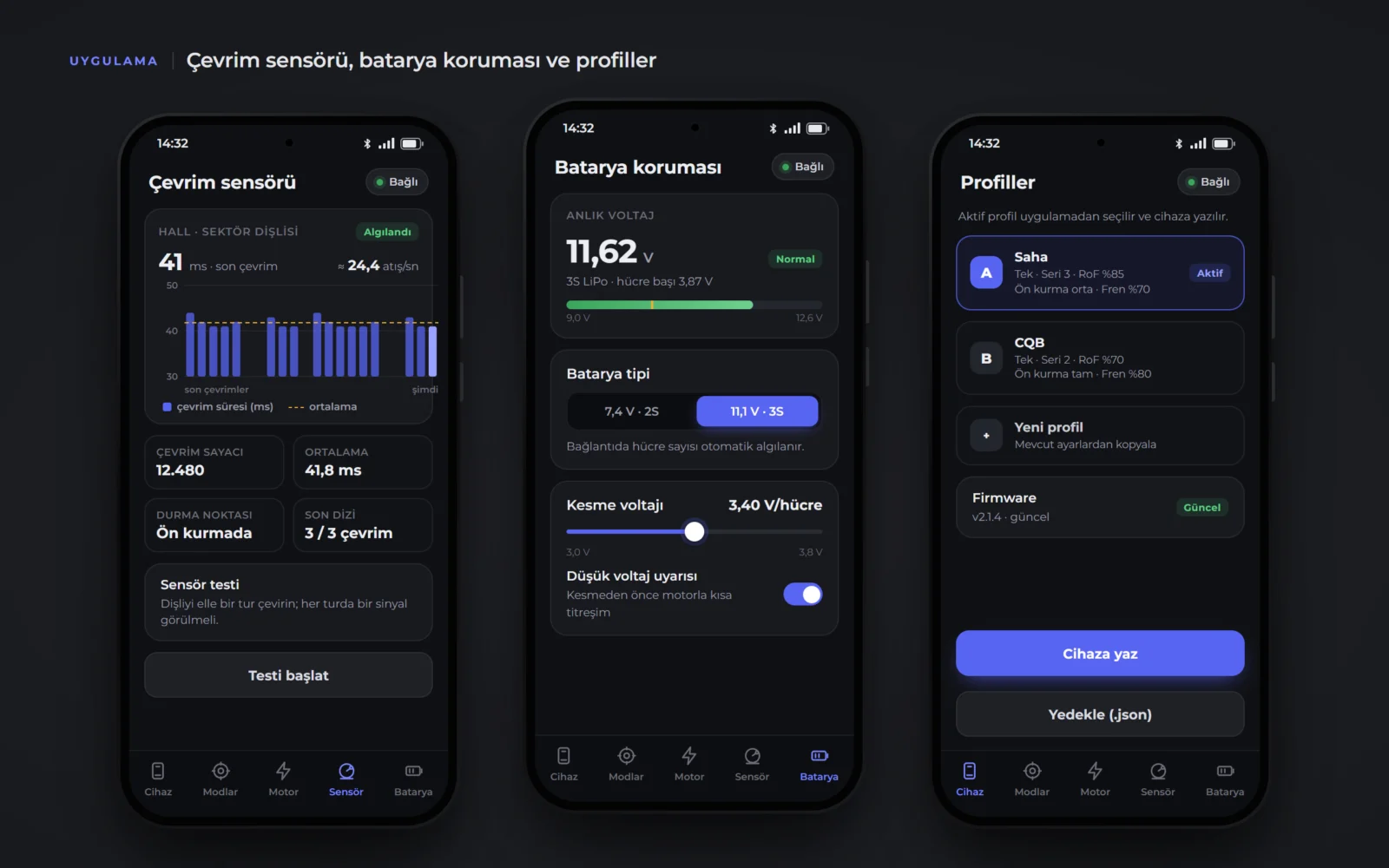
In a standard AEG the trigger closes a mechanical contact; the contact wears over time and fire modes stay tied to the gearbox’s mechanical parts. This unit drives the motor through a MOSFET and runs the firing cycle in firmware, using feedback from the gear’s actual position. Each board is designed and built for the gun’s gearbox type and the user’s requirements.
How it works
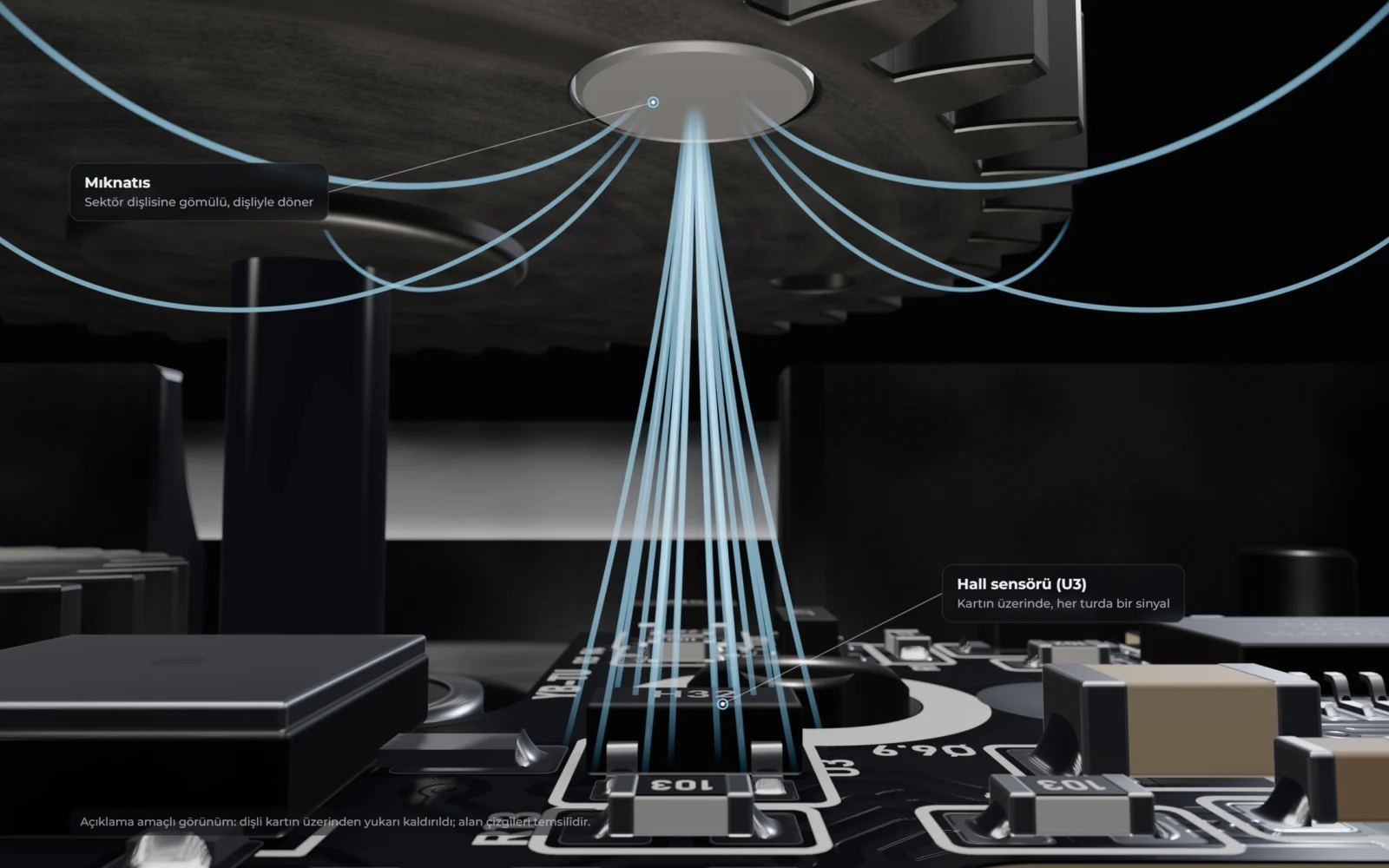
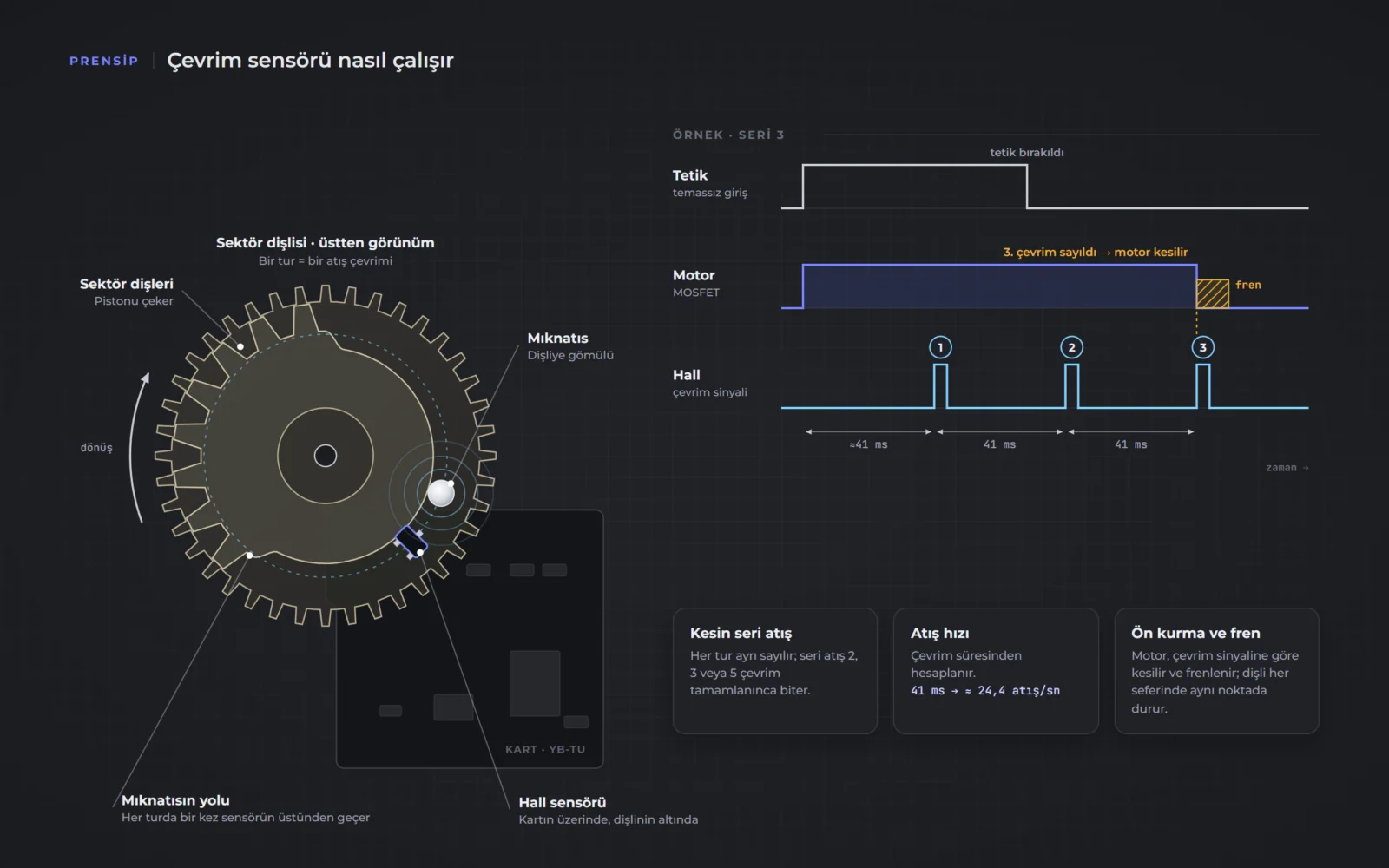
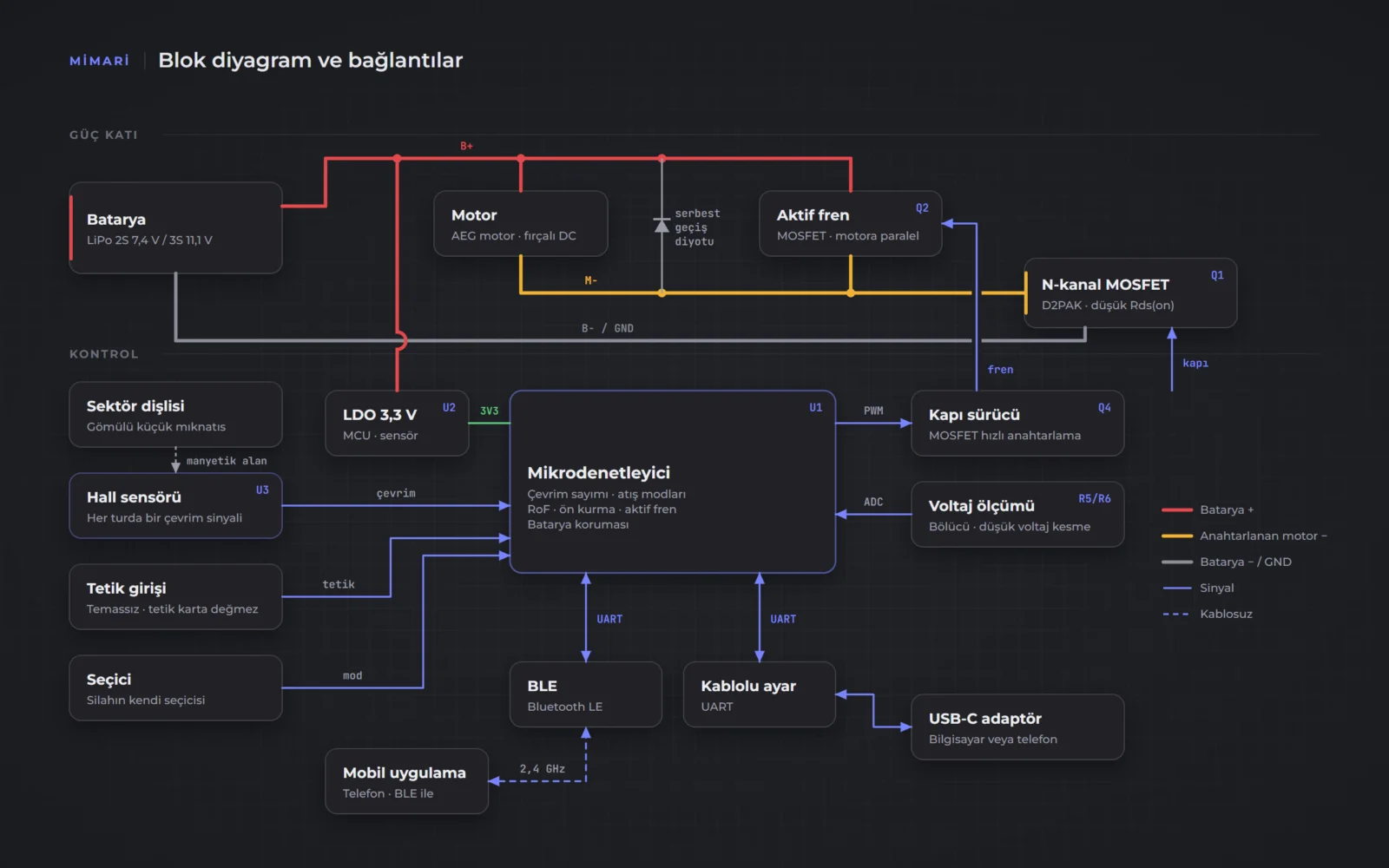
- Cycle sensing: a small neodymium magnet is fitted to the sector gear. Each time the gear completes a turn, the magnet passes over the Hall sensor on the board and the microcontroller counts the cycle. One turn equals one shot.
- Closed-loop control: bursts stop at the requested cycle, rate of fire is calculated from cycle time, and pre-cocking and active braking are timed from the gear position.
- Contactless trigger: the trigger never touches the board; the trigger input is contactless, so there is no contact to wear out.
- Power stage: an N-channel power MOSFET switches the motor, with a second MOSFET for active braking. Fire mode, rate and protection decisions are made in firmware.
- Configuration: wirelessly from a phone over Bluetooth LE, or by cable (UART) from a computer or phone through a USB-C adapter.
Highlights
- Fire modes: semi, burst (2, 3 or 5) and full auto, with any mode assignable to the selector positions. Optional binary trigger: one shot on pull and one on release.
- Rate-of-fire limiting: set as a percentage; the measured cycle time is shown in the app.
- Pre-cocking: the piston is held back for a shorter trigger response.
- Active braking: the motor is stopped as soon as the cycle completes, preventing overspin.
- Battery protection: per-cell cut-off voltage for 7.4 V (2S) and 11.1 V (3S) LiPo packs.
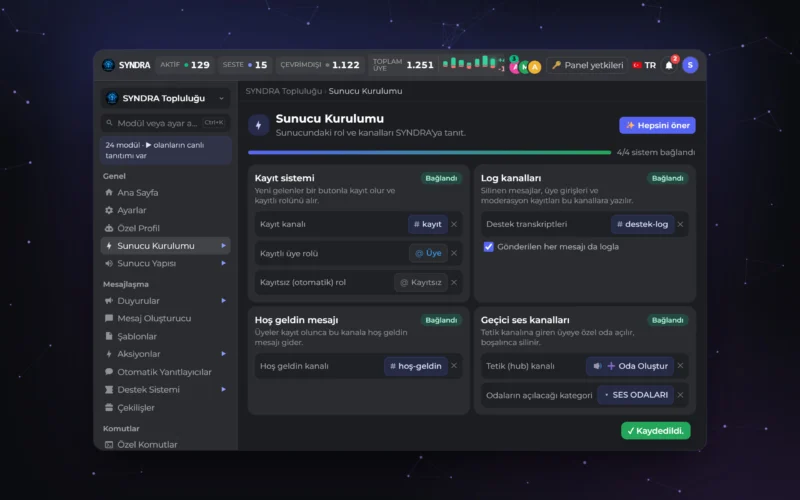
- App: cycle sensor data, fire modes, motor and battery settings, profiles, writing to the device and backups; shot counter.
Technical summary
Typical configuration; exact values are set per order.
- Supply: 7.4 V (2S) or 11.1 V (3S) LiPo
- Cycle sensing: Hall sensor and a small neodymium magnet embedded in the sector gear
- Trigger input: contactless
- Power stage: D2PAK N-channel MOSFET, second MOSFET for active braking
- Connectivity: Bluetooth LE; UART via a USB-C adapter
- Wiring: VDD, MOS and G solder pads
Technology
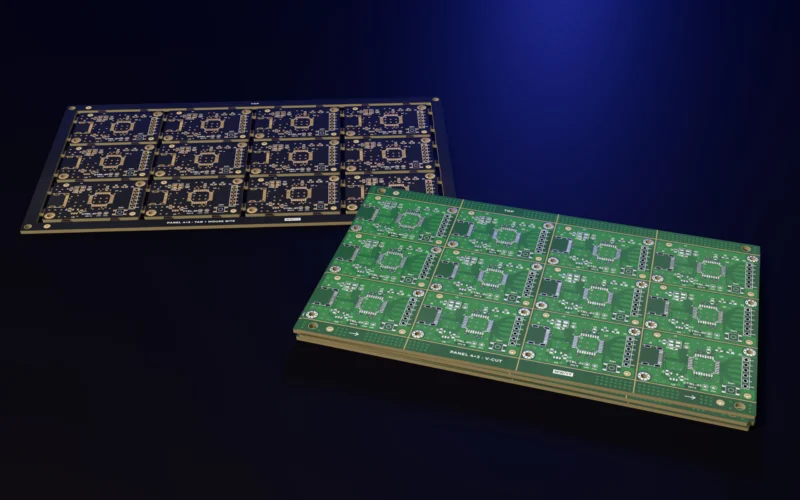
The project covers hardware and software together: the board’s PCB design, embedded firmware running on a microcontroller, Hall-effect cycle sensing, a MOSFET motor power stage with active braking, LiPo low-voltage protection, a configuration protocol over BLE and UART, and the mobile app that connects to it.
Custom builds and orders
The board outline, mounting holes and sensor position are drawn for the gun’s gearbox type. The mode set, default settings and wire lengths are agreed at order time. To order, send the gun model and how you plan to use it through the contact form or by e-mail.
Note: images on this page are illustrative 3D renders and sample app screens; board markings and on-screen values are examples.
The same approach, motor control with sensor feedback and wireless configuration, can be applied to other electromechanical products as well.